
Out with the Old, In with the New

28th April 2020 / Posted by Susannah Wilks

As my octogenarian mother gets her annual Spring Cleaning truly underway, it really does herald the dawn of a new era for all of us, in every possible sense. This week the planet’s population celebrated Earth Day, a timely reminder of the fragility in which all of us exist.

A key aspect of this fragility is the quality of the air that we breathe, every day, all day, and all night too. Although originally set up to build physical bridges, Cross River Partnership (CRP) has for more than a decade been delivering successful, collaborative projects to improve air quality in London and beyond.

Cast your minds back to CRP’s air quality projects over the years – Freight Electric Vehicles in Urban Europe, Last Mile Logistics, Freight TAILS, Smart Electric Urban Logistics, West End Delivery and Servicing Plan, Healthy Greening, Clean Air Better Business, Healthy Streets Everyday, Clean Air Thames, Clean Air Villages – it’s a long list, and the projects all have snappy titles!

And now in the midst of the global Covid Crisis, poor air quality means that communities living in that are  more likely to be affected by Covid-19, as they are more vulnerable to respiratory infections (Cambridge University study in the process of being peer-reviewed).

So CRP is already working with its public, private and community partners, supported by its funders, to rapidly flex its project delivery services to help meet some of the most urgent needs posed by Covid-19.

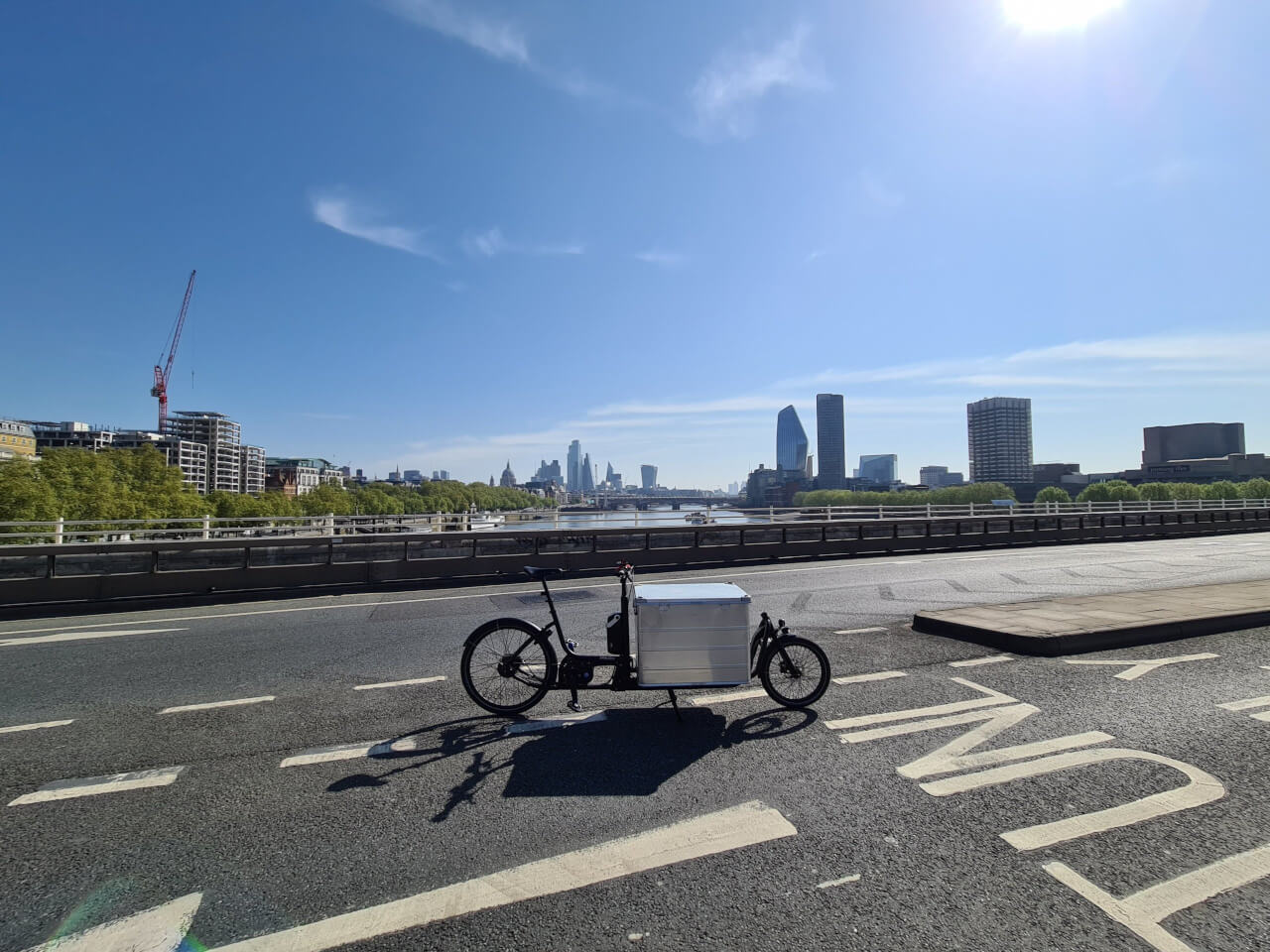
Think cargo bike deliveries of urgent pharmacy prescriptions to vulnerable residents’ doorsteps. Think food bank parcels going direct to hungry families’ homes.

Every little helps, and more so now than ever before, we really are Better Together.

Early in February 2020, the CRP Team of 12 met with the CRP Buddies, an informal network of mostly older, more experienced professionals, who worked for CRP at some point during its 25 years history.

Amongst other things, the combined group came up with four core CRP values, to underpin the flurry of project delivery activities that marks out CRP’s busy days achieving outcomes with partner organisations.

The four CRP core values were decided to be: Collaboration, Innovation, Enterprise and Resilience. These were built into CRP’s Business Planning process and document.

We had little idea of how much those values would be tested, and how much they have yet to be tested. But so far, they are standing us in very good stead.

CRP is fully committed to being as useful as it possibly can be to its Local Authority, Business Improvement District and Community Partners throughout this evolving Covid Crisis.

The pace at which these partners have responded to the Covid Crisis has been nothing short of astonishing.  And the pragmatic approach of CRP’s key funders Defra, Innovate UK, the Greater London Authority and Transport for London, is only to be applauded.

As we enter our fifth week of lockdown, air quality in London and other global cities is better than in living memory.

Let’s commit to keeping air pollution low, even as we emerge tentatively from lockdown at some point, or points, in the future.

Do I really need a car? Could I walk that trip? Why don’t I continue to shop locally? Should my kids cycle to school (on their alternate school days)? What do I want from London’s streets? How can our pleasant land be even greener?

And let’s continue to collaborate. Politicians, scientists, technologists, economists, businesses, communities, optimists – all are needed. Even as we go with our mothers’ and grandmothers’ mantra: Out with the Old, In with the New.

Please get in touch if there is anything you think CRP may be able to help you with.  Even if we can’t help ourselves, we will almost certainly know a man (or a woman!), who can! Susannah Wilks, CRP Director.

International Car Free Days: An Inspiration to the UK

28th April 2020 / Posted by CRP Team

Car Free Day is an opportunity to champion traffic-free cities and active travel, with additional focus on place making and air quality. There are some amazing and innovative examples from across the globe on how to make Car Free Day exciting and fun for all.

Many African countries such as Uganda, Ethiopia and Rwanda have adopted monthly car-free days, an initiative launched by their governments to encourage non-motorised transportation and combat air pollution. With less vehicle activity on our streets and more people out walking and cycling, could we take inspiration and make Car Free Day a more frequent occurrence?

Car Free Day occurs twice a month in Kigali, Rwanda, shutting down major roads. Walking, running and cycling is encouraged over car use. This was introduced in 2016 by Kigali City Council, in partnership with Rwanda Biomedical Centre, in order to promote a healthier lifestyle. The Car Free Day package includes free medical check-ups, aimed at preventing and fighting non-communicable diseases. Rwanda have also banned plastic bags, a great roll over environmental initiative.

Car Free Day in Kigali promotes cleaner air and a healthier population, as well as giving the country green credentials and promotes sport. It has proven to be a great opportunity to exercise and socialise locally. It is also an opportunity for communities to develop where jobs are closer to home, and where shopping is within walking distance. As a result of Kigali’s success, Kenya, Uganda and Zimbabwe are also introducing their own days, and last year Ethiopia held its second Car Free event.
Other inspiring examples include Uganda’s Car Free Day in Kampala and Jinja, as well as Bogotá in Colombia and Raahgiri Day, India.

CRP Annual Report 2019-20 and Business Plan 2020-21 launched

28th April 2020 / Posted by CRP Team

Take a look at our latest annual report detailing the fantastic achievements we have made in collaboration with our valued partners over the past year! From completing the delivery of the Marylebone Low Emission Neighbourhood and Smart Electric Urban Logistics projects, to recommending policies to influence central London traffic volumes and types, and receiving the ‘Best Collaboration’ Award at Chartered Institute of Environmental Health –Excellence Awards 2019, and much much more.

Also detailed are our ambitious targets and commitments, some of which are well under way, to meet in the year ahead.

If you would like to find out more about Cross River Partnership, or if your organisation would like to partner with us, please do not hesitate to contact us.

Clean Air Thames Update

28th April 2020 / Posted by CRP Team

CRP is having conversations with operators who recognise that environmental sustainability, including improved air quality, is an important part of their strategy. There is a clear desire to incorporate or strengthen sustainability goals, including greening their fleets where possible. We are pleased that Clean Air Thames‘s Mayor’s Air Quality Funding will be available to help some of these operators retrofit their vessels to reduce exhaust emissions.

The restrictions the UK government has put in place to curtail the spread of the Covid-19 virus have also impacted river traffic. Some operators continue to supply the city with essential supplies such as food, fuel and medicine. Others provide essential services by moving the rubbish we produce to waste to energy centres.

However, many operators have had to scale down their operations, while others have had to dock vessels and furlough their crew. Nevertheless, they are taking a pragmatic approach to the situation by using this down time to look forward and review their business plans for when the restrictions ease.

For more information about Clean Air Thames, please visit the project page or contact Sefinat Otaru.

Celebrating Clean Air Villages Achievements  

28th April 2020 / Posted by CRP Team

This month we are celebrating the conclusion of Clean Air Villages 2 (CAV2), a one-year project funded by the Defra Air Quality Grant. Over the past year, CRP’s CAV2 team have worked with businesses to reduce emissions from deliveries and freight within some of the most polluted areas across London.

A celebration of CAV2 in numbers:

  • 13 Clean Air ‘Villages’ across 7 different boroughs with 9 different partners involved.
  • Hosted 11 air quality workshops, which invited the local business community to discuss the air quality issues and solutions relevant to their area.
  • 90 businesses engaged with via 121 meetings. This does not include the many more engaged via surveying, workshops, events and so on!
  • 13 local solutions implemented, each tailored to the business community, including setting up cargo-bike deliveries and shared electric vehicle schemes.
  • Over 2,500 miles driven in the Brixton shared electric van. These miles would otherwise have been carried out in polluting vans, avoiding over 1,450 kg of CO2 tailpipe emissions.
  • 24 new businesses listed on the CRP Clean Air Villages Directory. This brings the total to 50 businesses, all delivering using low or zero emission methods.
  • 28 Clean Car dongles now available. The first of these are being used by Hammersmith & Fulham Council who are looking at their fleet electrification strategy. Dongles are devices plugged into vehicles which measure the distance travelled, using GPS to see what infrastructure is near your route. They will compare EVs on the market, relevant to use of the vehicle.

The legacy of CAV2 continues, as the third year of Clean Air Villages has now begun! This year we are delighted to continue working with each of the 7 Local Authorities involved with CAV2, as well as welcoming 5 additional Authorities and 4 Business Improvement Districts.

For more information on the CAV programme, please contact CRP’s Project Manager, Kate Fenton.

Innovate UK

28th April 2020 / Posted by Susannah Wilks

CRP has submitted a £50,000 bid to Innovate UK to support its public, private and community partners to get Back to Business safely as the Covid-19 crisis evolves.

CRP is already delivering a larger Innovate UK-funded project, Electric Vehicle Fleet-Centred Local Energy Systems (EFLES), with partners including UPS, Moixa and UK Power Networks.

CRP would like to thank its Board Co-Chair Business Improvement District Camden Town Centre Limited for playing the lead partner role on its latest collaborative Back to Business Innovate UK bid.

The Back to Business bid has been designed to support businesses of all sectors and sizes to adapt to operating differently in this initial Covid-19 lockdown, and through future anticipated lockdowns. The aim is that further government help may be released as a result.

Measures to be encouraged will include businesses delivering products and services direct to communities’ doorsteps, as well as rapidly adjusting the nature of those products and services, including who they are targeted at (e.g. business to community services to replace some business to business services).

CRP’s Back to Business bid can be viewed here. For further information, please contact CRP’s Director Susannah Wilks.

New partnership project – EV Fleet-centred Local Energy Systems  

28th April 2020 / Posted by CRP Team

CRP is delighted to announce that we have been successful in securing funds as part of the UK government’s Industrial Strategy Challenge Fund’s Prospering from the Energy Revolution challenge.

EV Fleet-Centred Local Energy Systems (EFLES) is an innovative 12-month collaboration between UK Power Networks Services, UPS, Moixa and CRP. The project will build on the technology and lessons learnt from CRP’s SEUL project, which delivered a new method of simultaneously recharging an entire fleet of electric vehicles without the need for an upgrade to the power supply grid.

For more information, please contact Tom Linton-Smith.

The Green Recovey Call: A Sustainable Focus for Businesses 

28th April 2020 / Posted by CRP Team

During this difficult time where the coronavirus crisis is shaking the world, the health sector, economy and society are having to adapt to fight the current situation. The challenging situation has called for mobilisation on a green recovery to Reboot & Reboost economies for a sustainable future. When it comes time to rebuild the economies across the world it is the opportunity to develop a new model of prosperity with a strong focus on green principles.

The Green Recovery Call includes a transition to a climate-neutral economy, the protection of biodiversity and the transformation of agri-food systems to contribute to building more resilient societies. A group of 180 political decision-makers, business leaders, financial leaders, NGOs, stakeholders around the EU have started to sign the Green Recovery Call.

Have our streets been reclaimed?

28th April 2020 / Posted by CRP Team

Taking a moment to reflect on lockdown, it is apparent that a communal sense of behaviour change has become embedded within Londoners. Lockdown has allowed us to take a step back and admire the lower levels of pollution and the reclamation of urban areas by wildlife as a result of the many deserted streets, once dominated by traffic.

Never has there been a more important time to admire and cherish our streets, neighbourhood and parks. As part of the Healthy Streets Everyday (HSE) programme, CRP is continuing to support both borough and private partners through this challenging time. Current services are still going ahead, such as our Hackney School Streets Helpline which is offering support to our borough partners through all stages of their School Streets implementation.

In addition, CRP is currently working on additional resources to support our partners through this crisis. We are exploring various avenues to assist boroughs with the implementation of new infrastructure, aimed at making walking and cycling safer. We intend for this support to be delivered through revised monitoring techniques and guidance documents.

We would like to hear how you view your local streets and neighbourhoods during lockdown by completing this survey. Your feedback would be greatly appreciated. Remember to stay safe and always follow government guidance.

For more information, please contact Tomos Joyce.

Barriers for councils to create car-free streets temporarily lifted

28th April 2020 / Posted by CRP Team

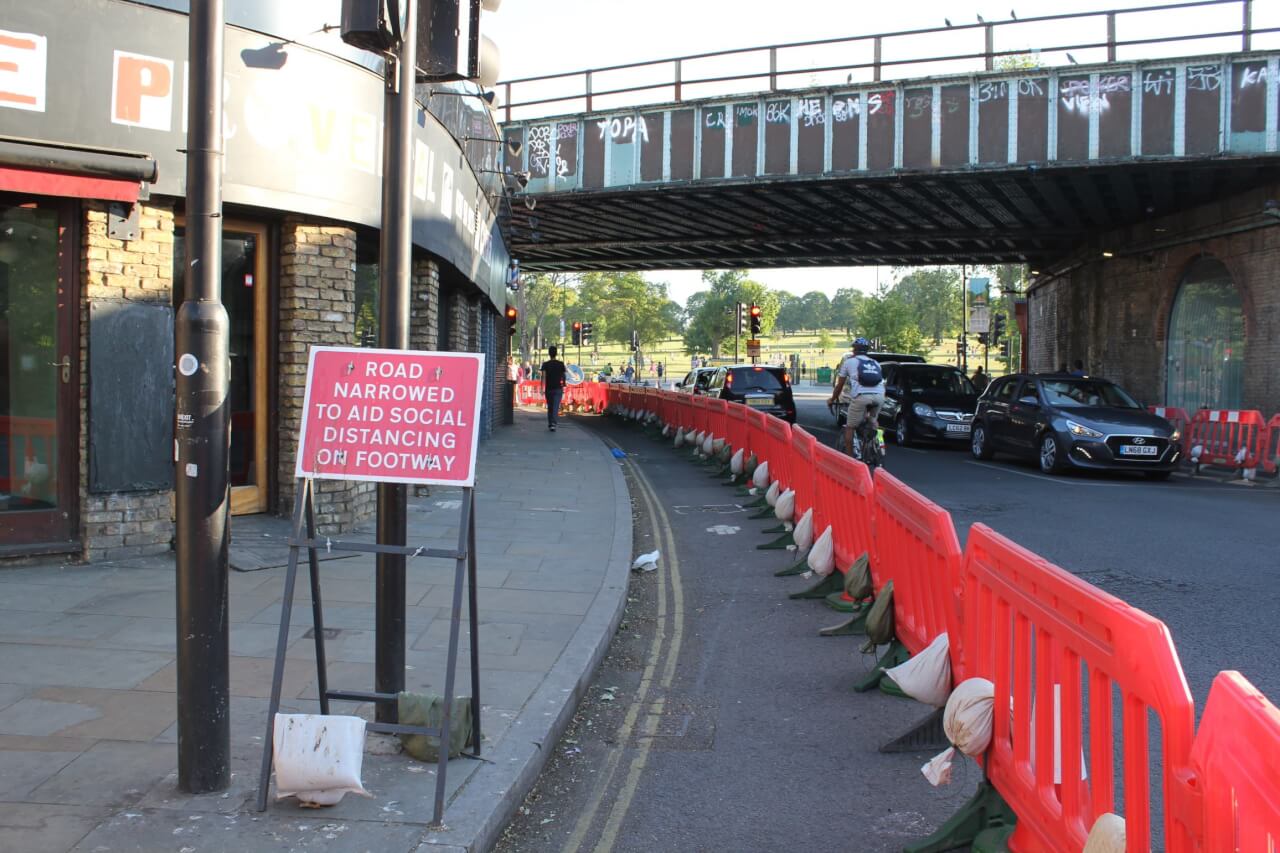
The Department of Transport has sent a letter to councils in England saying that they can temporarily by-pass lengthy procedures to implement street closures – a key aid that will help people walk and cycle more easily whilst social distancing during the current crisis.

Transport for London (TfL) is looking at the major roads that it manages, to see where pavements could be temporarily enlarged. It is also adjusting and balancing traffic light timings to make it safer for pedestrians and cyclists to cross major roads whilst ensuring critical road traffic is still moving. In addition, TfL has pledged to work with London boroughs and the GLA to look at ways of reducing traffic on residential streets it does not manage. Read more here.

Although not linked, these announcements have come shortly after the recent publication of the Government’s ‘Decarbonising Transport: setting the challenge’ consultation document, within which Transport Secretary Grant Shapps has highlighted “Public transport and active travel will be the natural first choice for our daily activities.”

The new measurers by the Department for Transport and TfL are welcome news in the short term, to allow key workers as well as pedestrians and cyclists the necessary space to safely social distance outside during the outbreak. But what happens after the lockdown is lifted and businesses re-open – will traffic, and with-it air pollution, return to London’s congested streets?

Other cities across the world are making temporary changes to their transport infrastructure with some, such as Milan, going further and implementing long term commitments to relocate street space from cars to pedestrians and cyclists after record breaking reductions in air pollution since the start of the lockdown.

CRP’s Healthy Streets Everyday programme is supporting our partner boroughs, BIDs and landowners to implement these longer-term streetscape improvements and traffic regulations across London, recognising the importance of supplementing yearly car-free day events with more permanent actions.